Showing posts with label Gardening for Butterflies. Show all posts

Thursday, December 10, 2020

Chasing Butterflies

Admiration for butterflies has long been my hobby. That is coupled with taking their photos whenever time allows. This hobby will not be complete without the other, as the fulfillment of being a butterfly hobbyist is having a lot of their photographs stored in your files. Some good shots are made into the owner's screen saver and others even have their favorite shots printed and laid in picture frames. Sometimes, a nice picture even makes a lovely greeting card for some friends. The possibilities of using butterfly pictures are endless, and fans range from children to the children once.

Other people with entrepreneurial inklings raise butterflies for sale, and even for export. These days, weddings, thanksgivings, birthdays, baptisms, anniversaries, you name it, and many affairs use butterflies as symbols of happiness. They release the butterflies at specific moment in the program to commemorate whatever theme they are celebrating. Release of butterflies can even signify many meanings, but mostly freedom, peace, tranquility, beauty, forgiveness, accomplishment, Every symbol for butterfly release denotes positive meanings, just as the flapping of the wings signify.


LIME BUTTERFLY, Papilio demoleus demoleus' COMMON MORMON Menelaides polytes ledebouria

My fondness for butterflies give an extra meaning for me. I chase them, photograph them in my garden, in our vicinity and in some undomesticated areas with the hope of documenting all the Species Total Count in our town. The happiness of finding one species not yet in the original list gives a certain high, a certain euphoria that might not be relatable for other people. I hope to publish the species photos in a book, but if it will not materialize, then at least others will find them in any other forms, when my curtain closes. At the least they are included in the website of Philippine Lepidoptera. I have them tabulated in matrix, alphabetically arranged with corresponding host plants for their larvae. They are all real as they are from my personal observations.


DARK BLUE TIGER, Tirumala hamata orientalis


LEMON PANSY, Junonia lemonias janome

 
\Those are just examples of pictures i recently took from the garden.  Since the pandemic i have not gone out of the house for any butterfly chasing in the vicinity. At least i have nectar plants intentionally planted to lure them in. And gardening for butterflies is another story.


PALE AWLET, Bibasis gomata lorquini


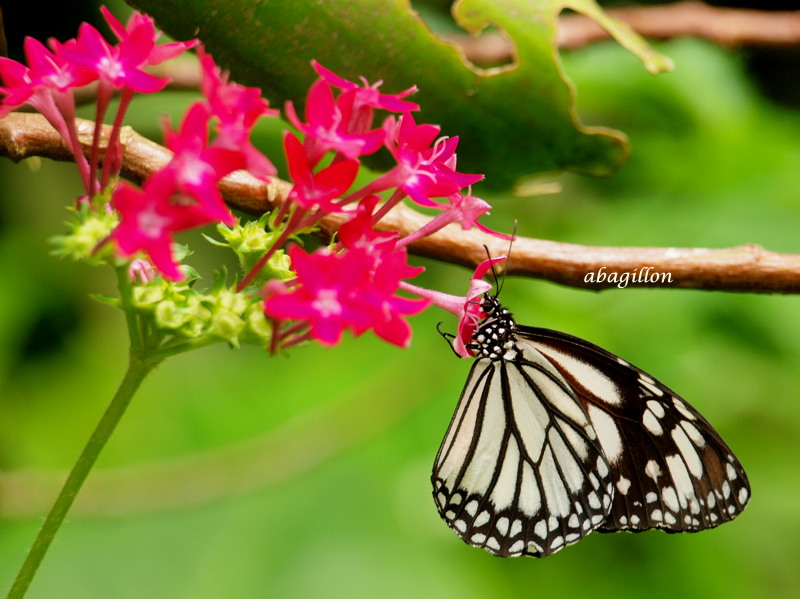
GLASSY TIGER, Parantica vitrina vitrina

Post Script: I have lots and lots of butterfly pphotos, but blogging after more than a year of not posting gave me lots of difficulties in picture layout. Oh My God i behave like the first time in 2008 when i did my first post. I hope i still regain my patience of repeatedly previewing, editing again and again. My finished post here is not to the best of my liking, but ....here it is, a new beginning!


Monday, February 5, 2018

Gardening for Butterflies III

Gardening for Butterflies Part III

The first 2 parts in case you missed them: Part I, Part II

1.  Vitex negundo (lagundi)

Lagundi is a medicinal bushy tree whose leaf concoction is famous as cough remedies. In fact a local pharmaceutical company has been reaping gains in capsulizing its leaves and going into the modern pharmaceutical route. I also use the capsules because i don't like the scent and taste of the boiled leaves like the traditional folks do. Usually, it is good for allergic cough or bronchial asthma as is written in the label prescription.

It was just lately that i realized some butterflies love to nectar on its very small flowers. In the vacant lots near our area they are cut back so as to allow grasses to grow for cattle grazing. But this one tree was left alone, so the cows can be tethered on its already strong trunk. So i see lots of insects and butterflies roaming around it. There was even a hawkmoth having it as its host plant.

a skipper nectaring on lagundi flowers

the branch inflorescence of lagundi

another butterfly i can't identify

Great Eggfly, Hypolimnas bolina philippense


the leaves of lagundi

2. Clausena sp. (malarayap)

Clausena sp. is a cousin of the curry tree, also in the Rutaceae Family where the citrus species belong. The leaves also has the mild aroma, and is used by traditional folks in relieving some ailments. It is locally called "malarayap" because the smell is like that of "dayap" or lime. I find many butterflies roaming and nectaring on those white flowers. The tigers specially love them. However, our tree here is a bit tall of maybe 8 meters that limits me to take photos of butterflies there on top. 


The fruits starts from green and later becomes whitish when mature. They don't get orange or red when ripe, but just fell off the tree producing lots of seedlings around it when the rains come.  The young small plants are favorite host plants by the Common Mormon. 

young fruits of Clausena sp. 


a branch of flowering Clausena sp.

 3. Cosmos bipinnatus (cosmos)


The common cosmos in our area are the orange and yellow. I just got this red from a friend in the Visayas. It is loved by butterflies in her garden, but in our case the butterflies are not seen on them, maybe because i only go home on weekends and i have very limited observation period. Besides, maybe there are many preferred nectaring plants in our area that limits going to this cosmos. But addition of this bright reddish-pink color in the garden definitely adds charm to the garden.

It is a short-day plant, so my planting it almost at the end of the year obliged them to bloom while still very small, so they were not able to grow vegetatively before reproduction. I will be planting them earlier next year as the rainy season arrives to allow them grow taller before the onset of blooms.


4. Vigna unguiculata, V. unguiculata ssp sesquipedalis (cowpea and stringbeans)

Vigna is a vegetable, planting it in the vicinity of the garden brings not only food for humans but also food for butterflies. I noticed many lycaenids nectaring on them, and it even hosts the Gram Blue larvae. A few square meters growing this produces hundreds of lycaenids in the vicinity. I really enjoy taking lots of photos of butterflies from these plants.

Both the short fruited cowpea and the long string beans have the same effects on lycaenids.


5. Urena lobata (our local term for this in my place is kulutan)

Urena lobata is just actually a weed in fallowed areas. They have strong roots and difficult to uproot by hands. They are normally growing lower than 1 meter. Those pink flowers are just around 1 cm in diameter. One will only appreciate the flowers when shot in macro, because of their size and only opens in one day. The small butterflies and skippers love nectaring on them too.


6. Wedelia trilobata (Singapore daisy)

These are just growing as weeds in our sidewalk, not even protected from any animals tethered in the area. Maybe they just escaped domestic plantings, as they are a bit invasive. The lycaenids are the normal butterflies seen nectaring on them, as well as occasional grass yellows,  skippers, Sailers, and Typical Sailers. 

left is a Tiny Grass Blue, Zizula hylax pygmaea and 
at right is a Gram Blue, Euchrysops cnejus cnejus 

a Grass Yellow on Wedelia

luscious growth of undisturbed Wedelia trilobata

7. Noid 

Sorry about this as i still canot find its ID. Eventualy when i find it or someone can tell me what it is, i will update the information. Thank you. 

It has always been with us for the longest time. Due to its small size, it is not particularly obvious to us and just considered weeds. However, small butterflies love nectaring on them.  


Lesser Grass Blue  Zizina otis oriens


8. Bidens alba

I just added the identity of this weed here, as i just asked someone in Singapore who just posted it. It has been found to be invading vacant spaces in many places here. In our area i observed it to be just there for the last couple of years, growing along street sides and marginal areas. The flowers are lovely, but it maybe colonizing areas and conquering the endemic species. I see some butterflies on them, but not as plenty as in the endemic species. 

I already know its identity, Bidens alba. My friend said it was brought by the Japanese here during the war as they eat the young leaves. Maybe it started somewhere and being invasive it is now in our property easily conquering most areas. It is also called Spanish needles, pitchfork weed, etc. It is true that the young shoots and leaves can be eaten as vegetables, as well as the petals. A reference said it saves the butterfly population in America because of its good production of nectar.


 a lycaenid, Lime Blue Chilades lajus athena  


Friday, January 12, 2018

Gardening for Butterflies

(Note: The draft of this was done 2 yrs ago, but i forgot to follow it up and post. Now i updated most of them and added more photos)

Oh how lovely it would be if i can write a book, Butterfly Gardening, or Gardening for Butterflies. This means i must augment my butterfly photos, that i have neglected in favor of my hoyas.  A few years passed that i haven't taken butterfly photos except when they alight on the hoya flowers. But that is seldom, as the frequent visitors of hoyas are moths at night. Actually, i have observed them again for the last two weeks. I took time out from the hoyas and took a few shots of the butterflies again.

Oh how lovely if i can do something about this. A garden showcasing the plants, their culture and their purpose of attracting butterflies. There will be 2 parts, the host plants and the nectar plants. And the landscaping part can be a bonus. Someone in the past said, there should always be "something to do, someone to love, and something to hope for". I guess a book on Gardening for Butterflies will be a nice thing to hope for! I guess i will just expand my plantings for more species to come. Then, i can invite my friends....

But before that happens, I must share here the plants in my garden that are magnets for butterflies. Some are not intended for a nice landscape, but some are purposely planted for butterflies. Some i  just realized when observing them. There are actually some butterfly species which prefer other flowers not preferred by most. Sometimes, there are specificity too. I will be putting here the plants that will not fail butterfly gardeners in the tropics.

Part I

1. Ixora coccinea


We have 2 hedges of these orange-red Ixora coccinea in our garden. They are just left there perennially and sometimes just trimmed back before the rainy season. I found them very dry season tolerant, as they still flower even with scorched leaves during our long dry season. One hedge is the above photo and also located in a more elevated part of the garden. Below is at the lower ground. 


Above is another clump of Ixora which is not included in the hedge. Butterflies prefer alighting on flower umbels, as they just withdraw and insert their proboscis in most of the individual flowers without getting off. That saves their energy by not often flying. 

 A scarlet mormon, Menelaides deiphobus rumanzovia is ofter seen on them.

A scarlet mormon showing the undersides, which maybe more attractive than the upper side. 

We also have a tree of Ixora javanica with even bigger red umbels. These species are all called "santan" locally. Butterflies especially the common mormon and scarlet mormon are mostly seen in both Ixora species. 

2. Lantana camara


This bushy orange lantana came from a very far island province in the Visayas, which i took during my travels before. The cuttings joined me in the plane, in the bus, jeepneys and tricycles before it reached our place. We just prune it to induce good growth at the start of the rainy season. It is loved by many butterfly species. Shown above is a Great Eggfly, Hypolimnas bolina, and a Glassy Tiger, Ideopsis juventa manillana.

This pink lantana is a wild species that grow at the edge of the garden. It doesn't look nice in a big bushy stand, also has unpleasant odor for humans, but is well-loved by butterflies. That blue one however got entangled at the spider webs, which make them purposely to catch the butterflies. Our garden also supports the food chain.

3. Pentas lanceolata


We have three colors of Pentas in the past, but only the red and the pink remained here this year. Both the white and the violet died completely during the last dry season. We had to obligingly water them last dry season to at least reach the rainy season again.

A male Common Mormon, Menelaides polytes ledebouria, is shown above lingering in sipping nectar.

 White Tiger, Danaus melannipus edmondii

The pink pentas is not as floriferous as the red. Its umbels are normally smaller too. This Danaid butterfly, a cousin of the monarch visits this often.

4. Impatiens balsamina

Please ignore its characteristics of being a bit invasive, at least they are easily pulled out of the soil if you want to eliminate them, or remove some. We have lots of them, and they are everywhere in the property. They started as a few seeds i got from the university grounds, and now they are seen everywhere even in the orchard. This clump is at the front of the house, and there still are clumps at the sides, the back and beyond everywhere, as long as there is soil! 

In the past, we have a few peach and pink, but they all perished last dry season. So i sourced again some seeds of violets and whites. Now the violets dominate growth around us. 

Scarlet Mormon (male), Menelaides deiphobus rumanzovia


I observed that the frequent visitors are the Scarlet Mormon and the blue male Wanderer Pareronia boebera boebera. The Eggflies, Blue Tigers, Lemon Emigrants, Crows, Pierids do not linger on them.  

Sometimes the Mycalesis igoleta igoleta go there but they just alight on the leaves, not sipping nectar. I guess they are just trying to keep cool or hide from direct sunlight. 

5. Clerodendrum intermedium


It is called "kasupanggil" in our dialect. This is well-loved also by butterflies as nectar source. Even if its characteristics is not like the usual umbels, the butterflies will be able to sip  from multiple flowers in this big flowering plant. The seeds turn purplish blue when ripe and scatter around to germinate again. We just limit their growths in the property, maintaining a few plants only for the butterflies. Swallowtails, the blues and the eggflies come here. However, it is also a host plant for some moth species.

6. Sphagneticola trilobata


It is also called Singapore daisy, also a creeper that has been used as ground covers in gardens. Eventually, it escaped cultivation and became weeds. They are not cultivated with ours, but are growing as weeds near the sidewalk. It has yellow flowers always visited by low flying butterflies. Above is a Common Three-Ring or Ypthima stellera stellera, always present whenever others fail to appear! This is a very friendly one for beginners.


These 2 are small lycaenids, Lesser Grass Blue Zizina otis oriens and Tiny Grass Blue Zizula hylax pygmaea . They are present here most of the time, and a beginner will not fail to photograph them. Just be ready with your macro lenses.

7. Duranta erecta

We have a big plant of this very near the porch. We just cut the branches before the rainy season to induce lush growths and flowers. I observed that the butterflies favored this much among all the nectar plants with us. It is so lovely finding a lot of species around it, with a few numbers in each species. They come and go, do their courtship rituals there, drive other species off, but they always come back. It is really a haven for butterflies. 

I already planted a few near the roadside so more children will observe them. A lot of butterflies actively surrounding a flowering plant is a sight to behold. Even the uninitiated with butterflies will surely love the show. The butterfly visitors of our duranta are endless, so a praying mantis permanently resides here for its sure ambush. 

A chocolate albatross, Appias lyncida andrea


A Blue Tiger, Tirumala limniace orestilla

Lemon emigrant, Catopsila pomona pomona

Scarlet Mormon (male), Menelaides deiphobus rumanzovia

Yoma sabina podium

 Great Eggfly, Hypolimnas bolina philippensis

Orange Gull, Cepora aspasia olga


There is a lot more! I hope you will not forget to come over again for the next Part.